Trading for Beginners: A Comprehensive Online Guide

 A guide to help you get started

Online trading is one of the most accessible ways to take part in the financial markets. It covers a wide range of assets, from currencies and stocks to commodities and more, and the core idea is simple: you form a view on whether an asset's price will rise or fall, and you buy or sell based on that view.
 
It's worth being clear from the start: trading carries real risk, and your capital is always exposed. Returns are never guaranteed, and the idea of turning a small sum into a fortune overnight is far more the exception than the rule. Most consistent traders build their results slowly, through preparation rather than luck.
 
That said, with the right knowledge, realistic expectations and a disciplined approach, trading can become a genuinely rewarding skill. In this guide, we'll walk through the fundamentals every beginner should understand before placing their first trade.


Beginners Introduction to Forex

Start Trading in 10 Minutes

Apply everything you’ve learnt on a real trading account with up to 1:2000 leverage, negative balance protection and outstanding support.
Get Started

What is online trading?

At its core, trading is a speculative activity: you're trying to profit from changes in the price of an asset. "Speculative" simply means you're forming a view on whether a price will go up or down, and positioning yourself to benefit if you're right. Because no trade is ever 100% sure, and thus even the best trades realistically can and will end up as losers, risk management is crucial for success.

Travelling and trading

Here's a simple, real-world example that makes the whole idea easy to grasp.
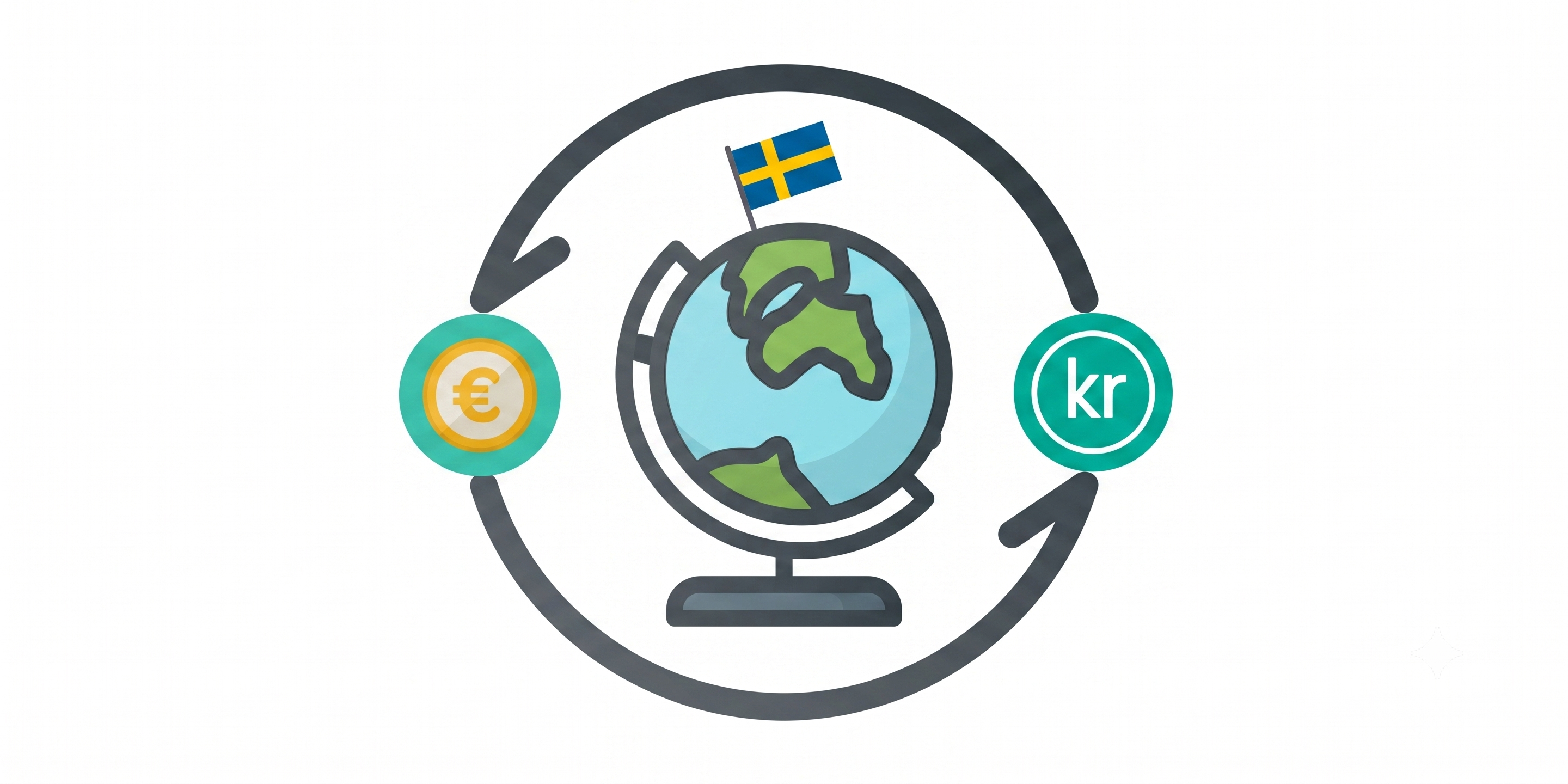
Imagine you're travelling to Sweden with only euros in your pocket. You assumed that, as an EU member, Sweden would accept the euro. But when you spot a shirt priced at 150 SEK, the shop assistant tells you they only take Swedish kronor.

Paying by card is rarely a problem, since banks convert currencies automatically. With cash, though, you'll need to find a bank to exchange your money. Let's say that on the day you arrive, 15 EUR gets you 150 SEK. In other words, the exchange rate is 10 SEK for every 1 EUR.

Money constantly changes in value

Now let's say you don't have time to exchange your money straight away, so you decide to do it later in the week. When you finally get to the bank, you notice that your 15 EUR now buys 170 SEK instead of 150 SEK. The EUR/SEK rate has risen from 10 to roughly 11.3, which means each euro is now worth more kronor. Happy with the better rate, you make the exchange and walk away with 170 SEK.

When you go back to the shop, though, the shirt you wanted has already been sold. So your 170 SEK sits untouched in your wallet for the rest of the trip. As your visit comes to an end, you head back to the bank to convert your kronor into euros.

This time, something annoying happens. Instead of getting 15 EUR back, you only get 14 EUR. The EUR/SEK rate has climbed even further, to around 12.1, so each euro now costs more kronor than before, and your 170 SEK doesn't stretch as far. Over those two weeks, holding kronor while the euro strengthened has quietly cost you 1 EUR.
Online trading explained

Without realising it, you've just done a bit of Forex trading, which is the biggest asset class in all financial markets. While trading Forex through a broker, you’re doing the exact same thing, although instead of a physical exchange, it’s happening through a trading platform, and with better prices than a physical exchange would offer.

In short, the goal is to buy an asset when its price is low and sell it when the price is higher. That difference between the lower buying price and the higher selling price is where your profit comes from. And, of course, when the market moves against you, it's also where the loss comes from.

With that foundation in place, let's look at the main markets you can actually trade.

How does online trading work in different markets?

Online trading covers a diverse range of markets and instruments. You might trade currencies, company shares, commodities, or something else entirely. The most commonly traded asset classes are:

  • Forex
  • Stocks
  • Commodities
  • Bonds

This isn't a complete list, but these are the instruments most widely used by institutions and individual traders alike. So what does each one actually mean, and how do they differ from one another?

Forex

As the travel example showed, trading currencies is known as Forex trading. The term "Forex" comes from "foreign exchange", and the concept is straightforward: you exchange one currency for another and aim to profit from changes in the rate between them. It's also by far the largest and most liquid market in the world.

Stocks: buying a piece of a company

A stock represents a share of ownership in a company. Companies issue shares for a few different reasons, most often to raise capital for new projects or to broaden their ownership base. When you buy a stock, you own a small piece of that business.

In practice, stock trading works much like Forex. When political or economic events push a share price lower, some traders see an opportunity to buy. Rising demand can then push the price back up, and traders who bought earlier may sell once the price is higher, profiting from the difference.

Commodities: trading natural resources

Commodities are physical goods and raw materials, ranging from precious metals like gold and silver to energy products like oil and gas. In short, anything raw that occurs in a natural state tends to fall into this category. This also includes goods you might not realise are financial assets, such as corn, cotton and even live stock.

Commodity trading follows the same buy-low, sell-high logic as other markets, but the things that drive the price are different. Gold, for example, is strongly tied to inflation and general market sentiment, whereas oil is mostly directed by asset-specific trade flows and geopolitics.

Bonds – the government assets

A bond is a debt instrument. When you buy a bond, you're effectively lending money to the issuer, typically a government or a corporation, which in return agrees to pay you interest over a set period and pay back the original amount when the bond matures.

Bonds trade on a market like any other asset, and their prices rise and fall depending on factors like interest rates and the financial health of the issuer. Traders can buy and sell bonds before they mature to profit from these price movements.

Start Trading in 10 Minutes

Apply everything you’ve learnt on a real trading account with up to 1:2000 leverage, negative balance protection and outstanding support.
Get Started

How to learn online trading without putting yourself at risk

Trading should always be approached with care, and experienced traders treat risk management as a core part of the process rather than an afterthought. You'll find no shortage of success stories online, but they rarely tell the full picture.

In reality, consistent traders put in the time to learn the terminology, the mechanics of the markets and a range of strategies. Every now and then someone profits quickly, but that usually comes down to chance rather than skill, which generally doesn’t last forever.

Rather than rushing in, it's worth starting with a few simple questions: What is trading? How does it actually work? And what do you want to achieve by doing it? Books, guides and tutorials can answer the first two easily enough. The rest comes down to your mindset and your goals.

Here are a few realistic attitudes worth adopting:

  • Getting rich instantly is highly unlikely, so it's best not to build your plan around it.
  • Knowledge reduces risk, but it never removes it, so staying careful is always sensible.
  • Take things steadily. Keep an eye on the market and the relevant news, set a long-term budget with small amounts allocated per trade, and avoid expecting overnight results.

Ultimately, your mindset and expectations matter most, followed by knowledge and experience. Even well-prepared traders take losses, because the markets are inherently uncertain. That's exactly why a disciplined, risk-aware approach is so valuable.

Online trading: one of the main forms of financial exchange

Trading is a major way of taking part in the financial markets, used by millions of people around the world. The principle stays the same across markets: you speculate on price movements to try to make a profit, usually buying when prices are low and selling when they're higher.

The most popular instruments are currencies (Forex), commodities, stocks, bonds and derivatives. Each one has its own community of traders, depending on their goals and how much risk they're comfortable with.

The key thing to remember is that online trading is highly speculative, and it isn't for everyone. Education improves your odds, but losses always remain possible.

FAQ on trading online for beginners

Is online trading for beginners safe?

It's open to beginners, but it carries real risk and it's certainly not a guaranteed path to profit. You've probably heard stories of traders who became very successful, and some of them are true. But there are at least as many stories of traders who lost money. The outcome depends on experience, preparation, discipline and market conditions. Understanding those factors, and managing your risk accordingly, is essential before you start.

How to start online trading?

Getting started is fairly straightforward, and there are a few approaches you can combine. The most secure route is to educate yourself first, learning about the markets, the instruments and the terminology. Alternatively, you can start trading with very small amounts to keep your risk low while you gain experience. Many traders do both, studying while trading on a small scale. There's no single correct method, so the best approach is really the one that suits you.

What are the steps to start online trading?

Online trading can feel intimidating at first, given how many factors are involved. A sensible sequence is the following:

  1. Develop the right mindset as meaningful results take time.
  2. Decide which market suits you, whether it be stocks, commodities or Forex
  3. Plan the practical details: when to trade, which platform to use and how much to allocate.

Working step by step helps you stay focused and avoid feeling overwhelmed due to the size of the challenge at hand.

How to learn trading skills?

There are a few paths you can take. The formal route is a university degree in economics or finance, which gives you a strong theoretical foundation, though it takes a fair amount of time. Alternatively, you can learn on your own through books, courses and online resources. Self-study takes patience, but there's a wealth of high-quality material out there.

What are the different types of trading?

Trading is a broad activity that covers a number of different markets. The most popular ones are:

  • Forex: trading foreign currencies and profiting from the changes in their relative prices.
  • Stocks: trading company shares, whose value moves with the performance and standing of the business behind them.
  • Commodities: trading raw materials like gold, silver and oil.
  • Bonds: lending money to a government or corporation in return for interest over a set period.

Most retail traders access these markets through CFDs (Contracts for Difference), a type of derivative that lets you speculate on price movements without owning the underlying asset. And beyond the markets above, there's plenty more you can trade, from indices to real estate. In practice, almost any asset can be traded; these are simply the most popular places to start, and by extension the most liquid assets.

What changes the prices in online trading?

Prices are driven by a wide range of factors, and the ones that matter most depend on the market you're trading. Global politics, macroeconomics, major news events and sentiment can all move prices. In Forex, for example, a country's monetary policy has a big effect on exchange rates, which is why a lot of traders follow central bank decisions closely to anticipate where things might go next.


What are the risks of online trading?

Risk is simply part of trading. The most common challenge for newcomers is inexperience, which is exactly why starting slowly is a strength rather than a weakness. Most successful traders began cautiously and only increased their risk as their knowledge grew. And even experienced traders face the possibility of sharp moves or wider market downturns, so staying informed and managing risk carefully is just standard practice.

Axiory uses cookies to improve your browsing experience. You can click Accept or continue browsing to consent to cookies usage. Please read our Cookie Policy to learn more.