Introduction
The Middle East conflict continues to swing between peace and sudden re-escalation, while central banks are making key decisions on interest rates, and equity markets are caught in the geopolitical whipsaw. Join us in this market pulse as we unpack everything you need to know about what happened in financial markets this week.
Global Macro
This week was a prologue for the plethora of central bank meetings we shall see next time around. The ECB elected to hike rates from 2.15% to 2.4%. This move, when compared to other central banks, is extremely surprising.
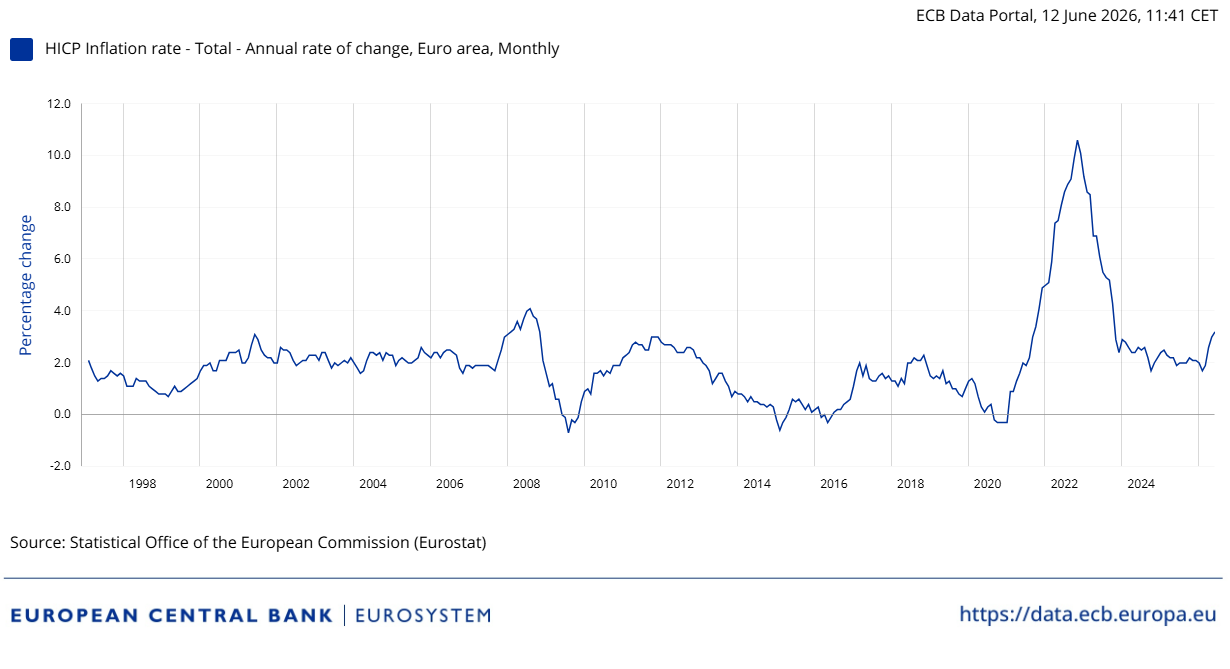
The Fed, for example, has not once seen inflation hit 2% or below since 2021, and yet the odds of it hiking next week are almost zero. The Euro area, however, has been having inflation right at the 2% long-term target consistently for the past 1.5 years. And yet when we now start seeing some surge in inflation, the central bank with the bigger inflation buffer is the one that is hiking rates.
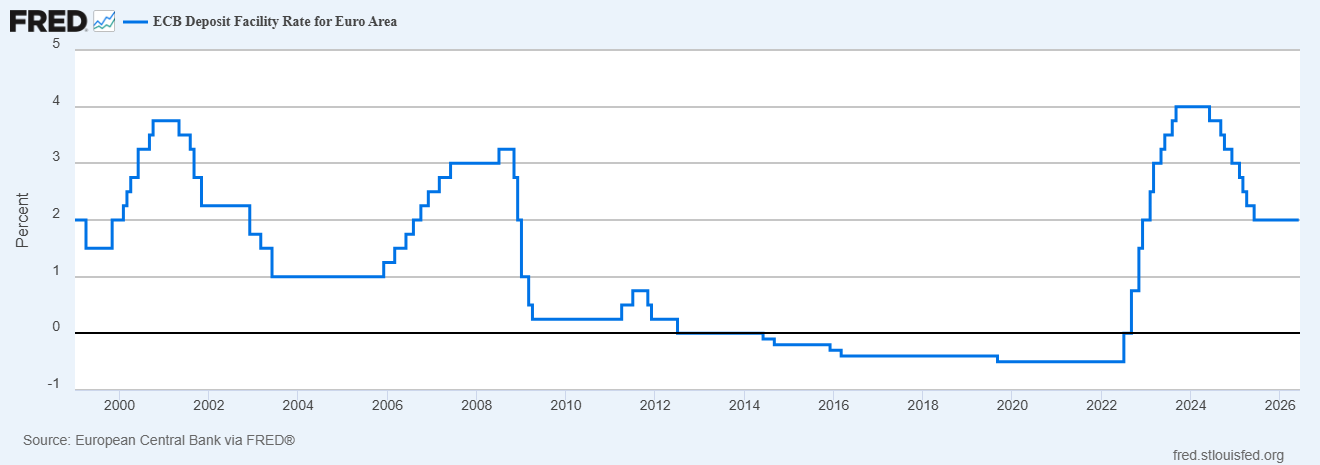
The most logical explanation is that the ECB is scared of a 2022 repeat (as well as high inflation expectations), where they were too late to respond to inflation surges, which led to that infamous inflation spike. However, the risks might now be tilted to the other side. Euro area growth has been weak, and hiking rates only puts more stress on this already struggling economy. This could lead to disappointing Euro Area growth later down the line.
Equities
In our last edition of Daily Technical Analysis, we noted how the Nikkei looked like it was in a vulnerable spot. The upcoming BoJ meeting has a rate hike priced in, just as the index had created a head-and-shoulders pattern on the 4-hour chart.
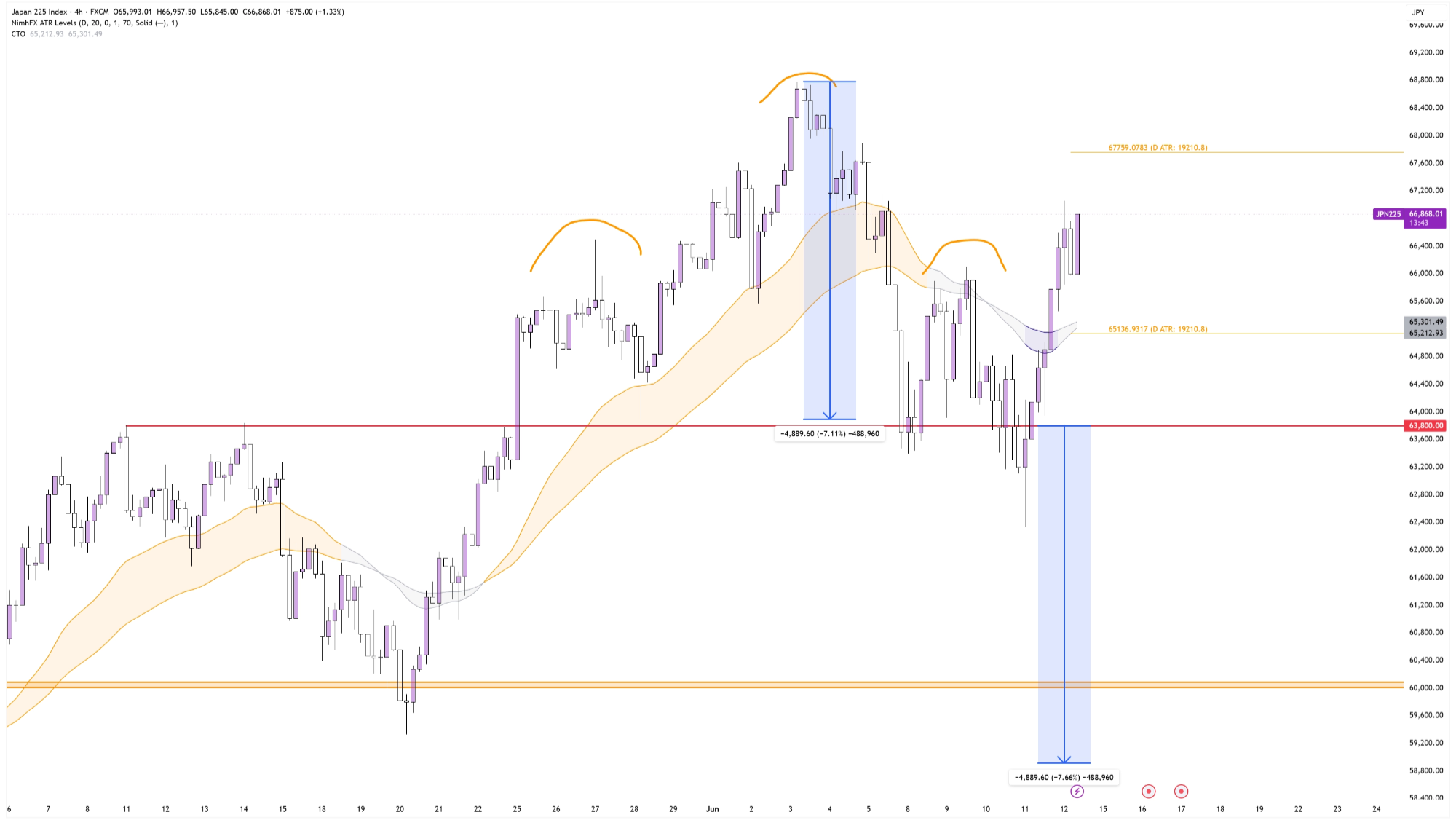
Nikkei 225 on the 4-hour Timeframe
That technical bearish factor has now been negated; however, not only did price reclaim the neckline at ¥63,800, which was also the key S/R level, but it also created a true bullish engulfing on the daily timeframe.
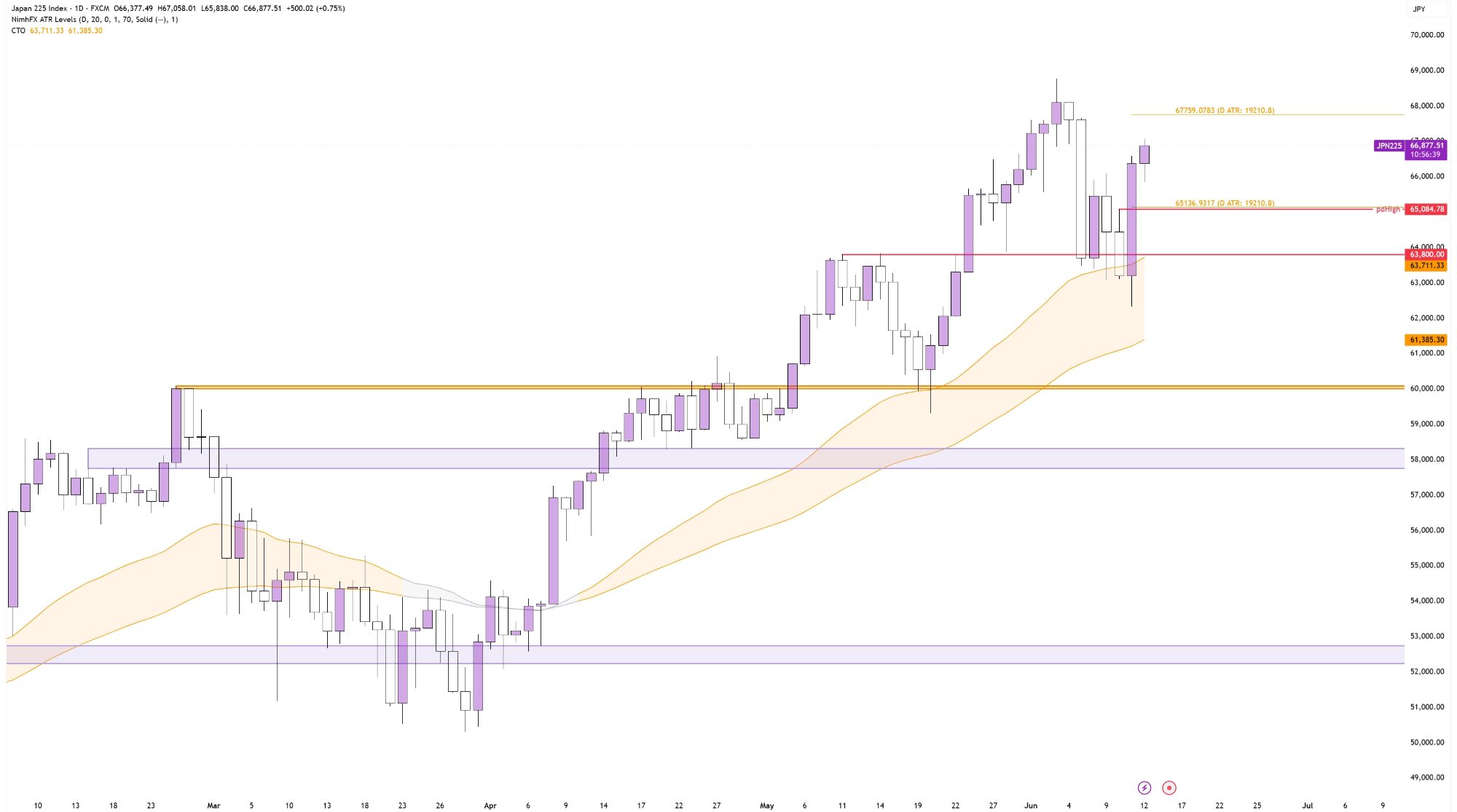
Nikkei 225 on the Daily Timeframe
Whenever a price chart leaves behind a bullish-engulfing candle, it’s worth marking out the high of the candle before the bullish engulfing. This level is often a key decision point for where the price will react.
If price retests this level and manages to hold it, then an interesting risk:reward opportunity presents itself to target the highs. In an alternative scenario where it fails to hold the ¥65,085 level, a retest of the low of the bullish engulfing at ¥62,330 becomes likely.
Forex
In Forex land, we’re experiencing calm before the storm, as next week we’ll see 5 central banks have their rate decision meeting.
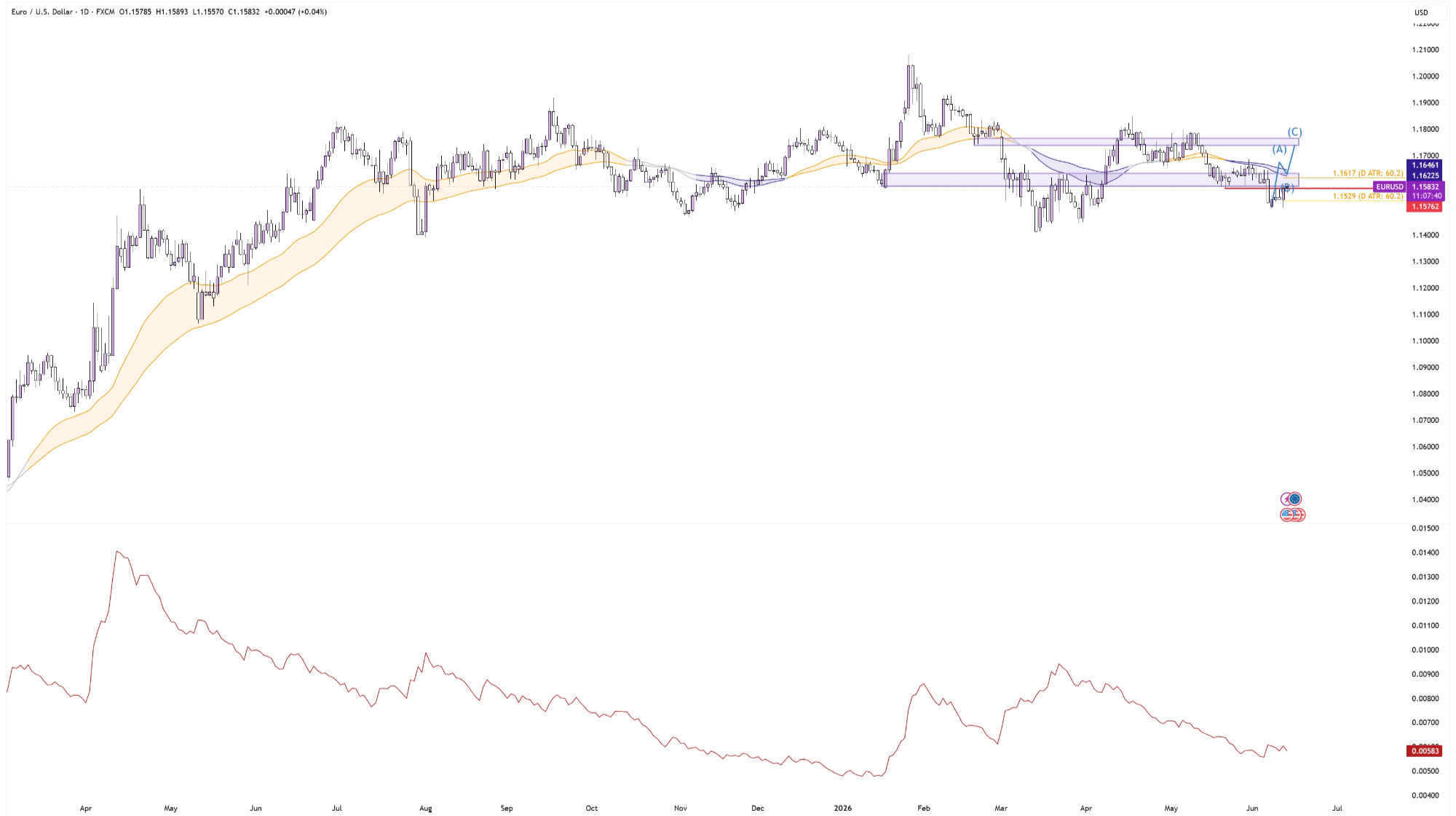
EUR/USD on the Daily Timeframe with Average True Range as an approximation for volatility
In general, however, we can see that volatility in most pairs has been low. Ever since the tariff craze of 2025, volatility has been in a sustained downtrend with two lower highs in February and April of this year.
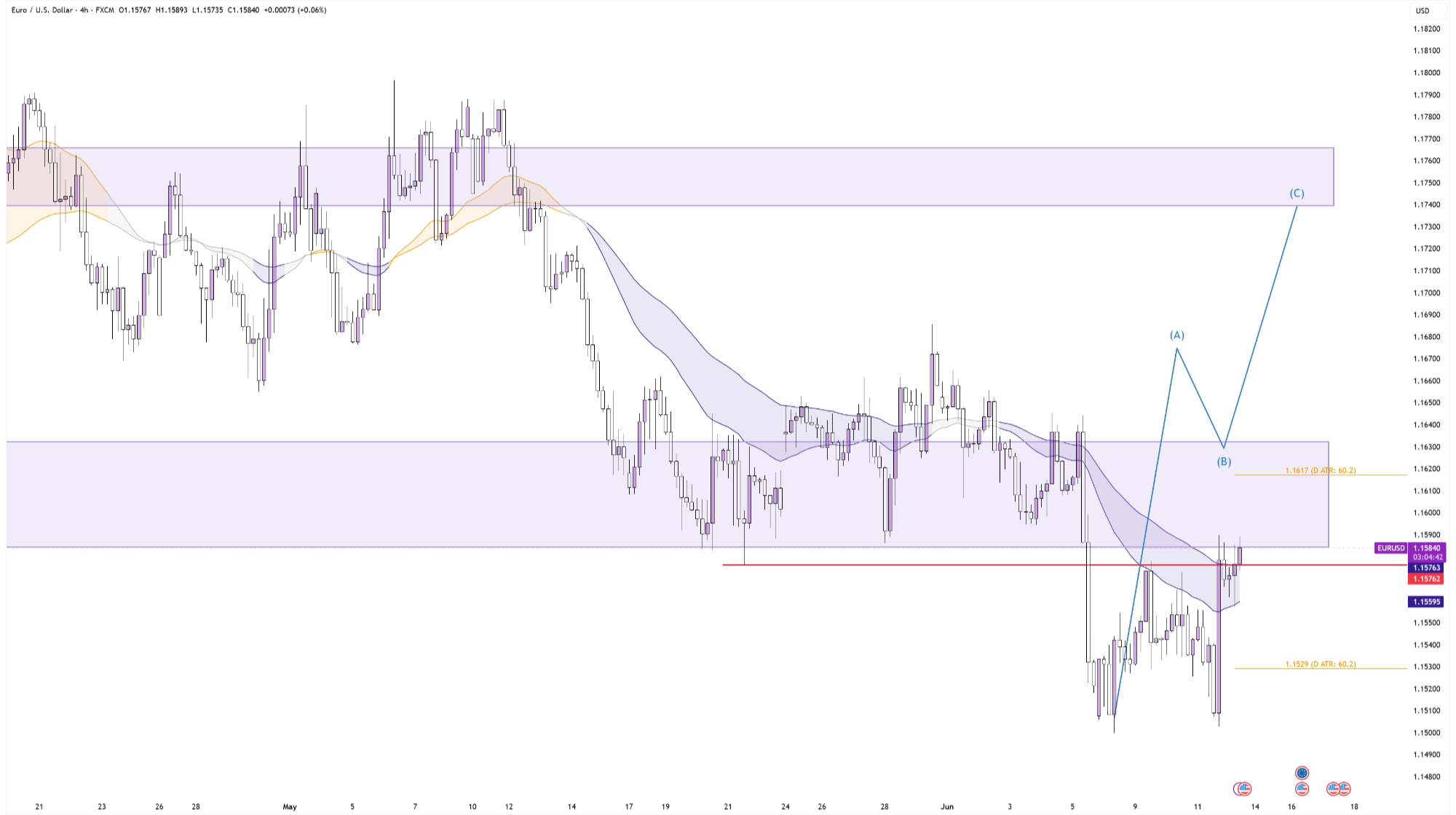
EUR/USD on the 4-hour Timeframe
That certainly doesn’t mean there are no opportunities to be found. In fact, we are currently monitoring EUR/USD as the pair seemingly is creating a failed breakdown. Range trading observations teach us that once one side has a failed breakdown/breakout, then a retest of the other side of the range becomes likely.
And provided some fundamental factors, like a dovish Warsh at next week’s FOMC, could send the pair beyond the upper resistance area at 1.174–1.176. in no time.
Commodities
Gold has officially broken down from its 4-month range. The asset has now lost the $4,350–$4,440 former support area, which now should act as resistance upon a former test. Furthermore, the anchored volume profile drawn from the $5,600 ATH now functions as a strong resistance point for future rallies.
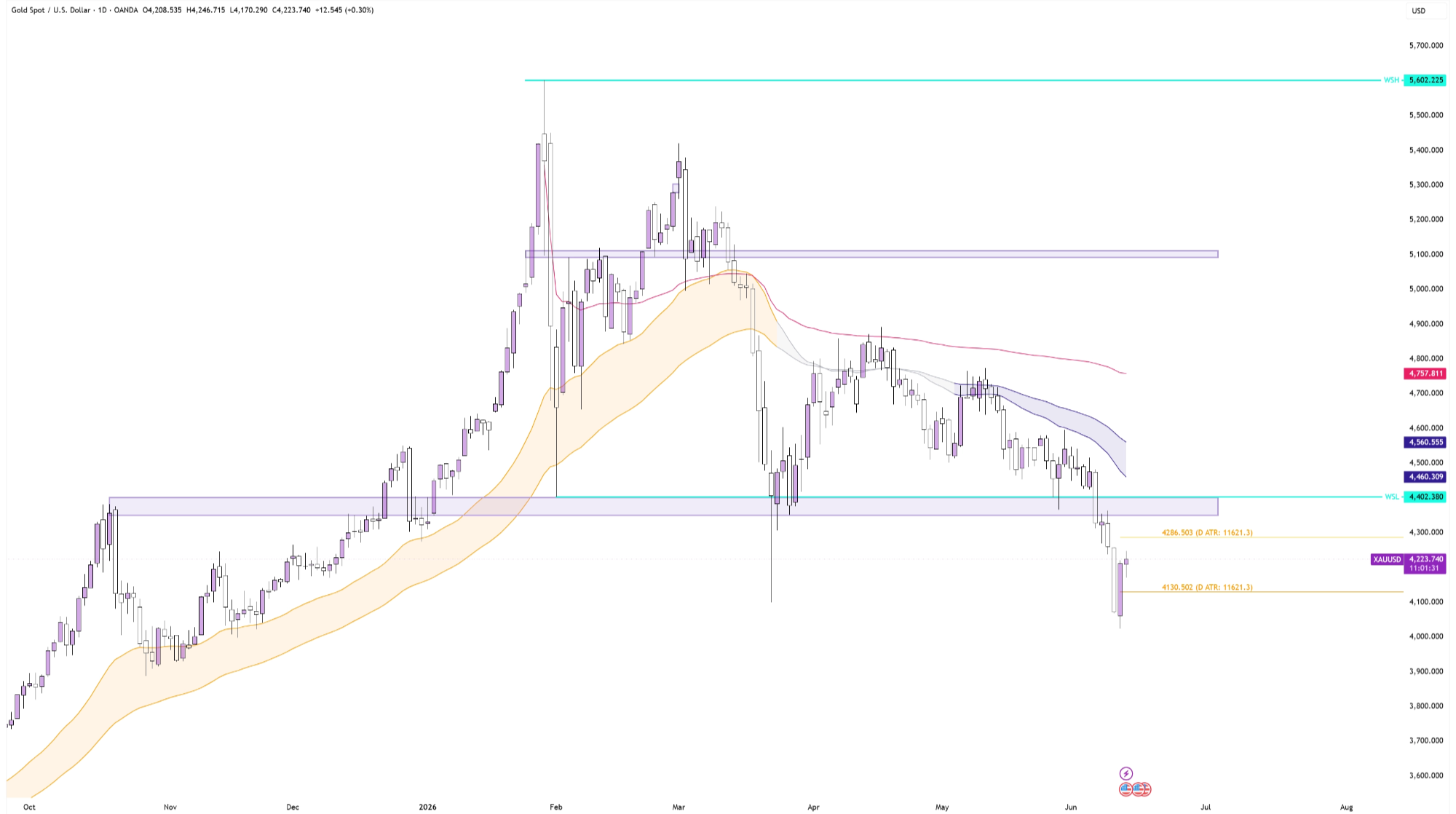
Gold on the Daily Timeframe
Conclusion
One-sentence summary of the week:
ECB Suffering from 2022 Flashbacks, Nikkei Negates a Head and Shoulders Pattern, and Gold Finally Breaks Down